
3D Matrix Light Technology: Design Structures, Frame Sync, and Control Protocols
3D matrix lights are among the most impressive visual display systems available today. They create volumetric lighting effects — floating 3D sculptures, animated logos, and immersive installations that captivate audiences in commercial spaces, hotel atriums, and exhibition halls.
However, not all 3D matrix lights are built the same. Behind the visual spectacle, there are significant technical differences in design structure, control protocols, frame synchronization, and refresh rates that directly impact installation, maintenance, performance, and long-term reliability.
This article explains these technical aspects to help you make an informed decision for your next project.
Design Structure: Sheet Metal Cabinet vs Modular Design
One of the most fundamental differences in 3D matrix light systems is the cabinet construction.
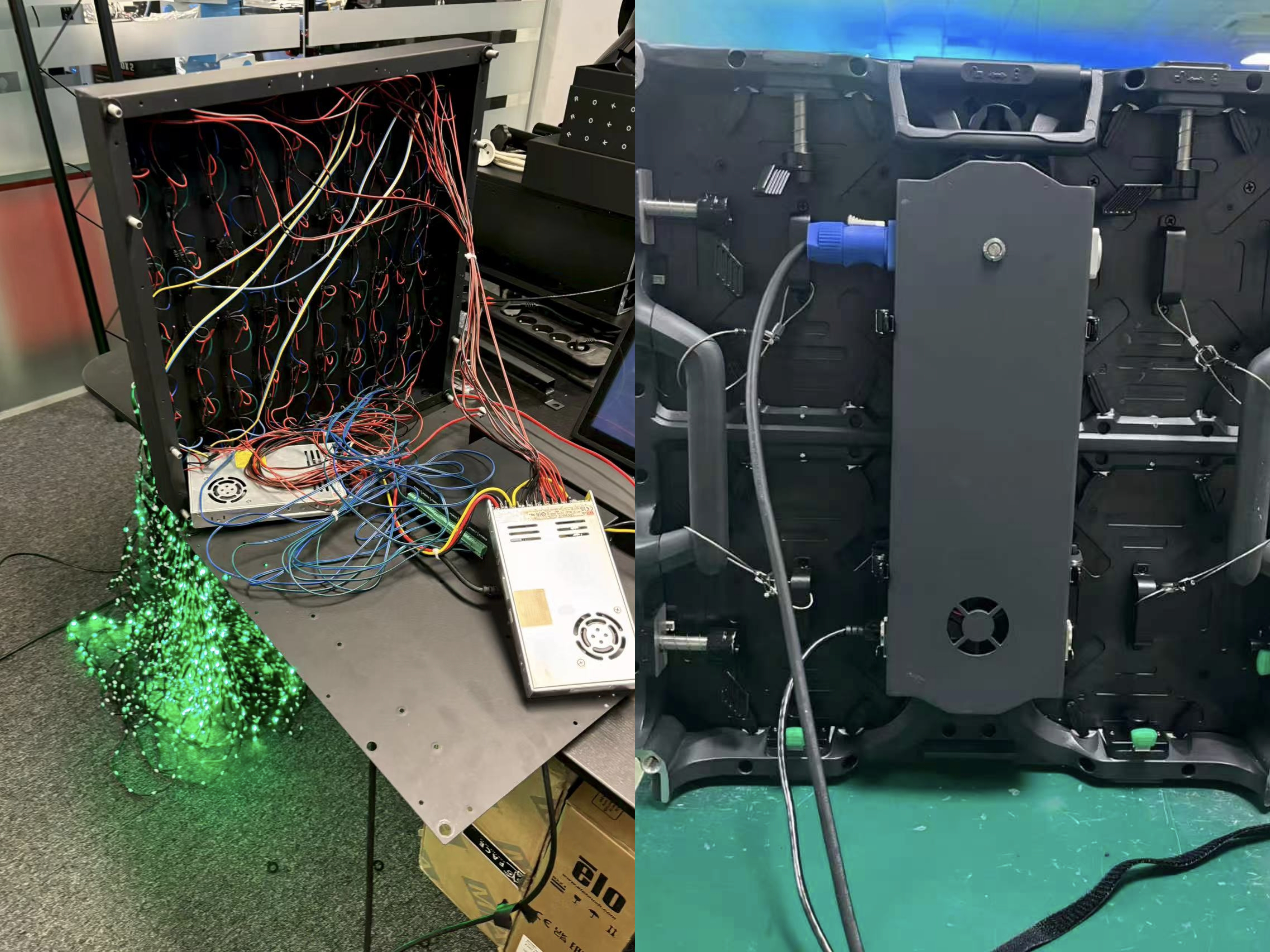
Sheet Metal Cabinet Design
In this design, the controller and power supply are built directly into the sheet metal cabinet.

The downside: If a single LED string fails, you must disassemble the entire cabinet to access and replace it. This increases downtime and maintenance costs — especially problematic for permanent installations.
Modular Design (Premium Option)
Modular 3D matrix lights use a more sophisticated construction approach.

The advantages:

Design choice matters: For permanent installations or projects where long-term reliability and ease of maintenance are priorities, modular design is the clear winner.
Frame Synchronization: Does Your System Support It?
Frame synchronization (often called "frame sync" or Art-Sync) is critical for installations using multiple cabinets or controllers.
What Is Frame Sync?
When multiple controllers drive different sections of a large display, each controller receives data packets at slightly different times. Without synchronization, this can cause screen tearing — where the image appears misaligned or "split" at the boundaries between controllers.

Frame sync solves this by sending a "sync" signal after each frame. All controllers receive the signal and update their outputs at exactly the same time.
Typical Performance
For many 3D matrix light systems, the typical frame rate is approximately 30 frames per second (fps). With frame sync support, 30fps is fully synchronized across all cabinets — ensuring smooth, tear-free animations.
Is 30fps sufficient? For most architectural, commercial, and entertainment applications, 30fps provides smooth motion and seamless effects. However, for high-speed video or broadcast applications, higher frame rates may be desired.
Control Protocols: Art-Net vs sACN
The choice of control protocol impacts system flexibility, scalability, and ease of configuration.
Art-Net
Art-Net is an Ethernet-based lighting control protocol widely used in entertainment and architectural lighting. It is the default protocol for many 3D matrix light systems.

sACN (E1.31)
sACN (Streaming ACN) is another Ethernet-based protocol that is increasingly popular for large-scale permanent installations.

Why Some Systems Choose Art-Net Over sACN
Some 3D matrix light systems do not support sACN by default. Why?

The workaround: If a client requires sACN support, it can be added through customization. However, for projects where RDM functionality is important, Art-Net is often the preferred choice.
Controller Compatibility
For clients who prefer to use their own controllers (such as Advatek, Falcon, or other professional controllers), the system is compatible as long as the controller uses the Art-Net protocol.
Key takeaway: The system is based on Art-Net, which is a widely supported open standard. Most professional lighting controllers — including Advatek, Falcon, Enttec, and others — can drive the system without compatibility issues.
Refresh Rate: LED vs Controller
Understanding refresh rate is important for assessing visual quality.
LED Chip Refresh Rate
The LED chips themselves may support a certain PWM refresh rate. In some cases, the LED chip can support 1800Hz.
Controller Output Refresh Rate
However, the controller output refresh rate may be different from the LED chip's maximum capability. In typical implementations, the controller outputs at 800kHz data transmission speed — which effectively determines the system's refresh performance.
Parameter | Typical Value |
|---|---|
LED chip PWM refresh rate | Up to 1800Hz |
Controller data transmission speed | 800kHz |
What this means: The controller's 800kHz data speed determines how fast data can be sent to the LEDs. This is more than sufficient for 30fps frame-synchronized playback, even with large numbers of pixels.
Summary: Key Technical Considerations
Aspect | Sheet Metal Cabinet | Modular Design (Premium) |
|---|---|---|
LED string replacement | Requires cabinet disassembly | Front-access, easy replacement |
Controller/Power service | Built-in, difficult to access | Separate backpack unit, easy swap |
Long-term alignment | May sag over time | Aluminum extrusion keeps flat |
Frame sync support | Varies by model | ✅ Yes (30fps synchronized) |
sACN support | Varies by model | Optional (customizable) |
Art-Net support | ✅ Standard | ✅ Standard |
Controller compatibility | Art-Net controllers | Art-Net controllers |
Refresh rate | Controller: 800kHz data speed | Controller: 800kHz data speed |
Final Thoughts
When selecting a 3D matrix light system, consider not just the visual effects, but also:
How will it be maintained? Modular front-access designs save time and money over the life of the installation.
How will it be controlled? Ensure the protocol (Art-Net / sACN) matches your existing control infrastructure.
Is frame sync needed? For multi-cabinet installations, frame synchronization is essential for seamless visuals.
What refresh rate is required? For most architectural and entertainment applications, 30fps with frame sync provides professional results.
If you have specific requirements — such as sACN support, higher frame rates, or integration with a particular controller — we can customize the system to meet your needs.
Looking for a 3D Matrix Light System?
We offer 3D matrix lights with modular design, Art-Net control, frame sync support, and customizable features. Tell us your project requirements, and we will recommend the right solution.
👉 Contact Us Today to discuss your 3D matrix light project.