Custom LED Hoist Project – Navigating Technical Challenges to Find the Right Solution
In the world of custom engineering, not every project goes as planned—but that’s where the real excitement lies. Our recent collaboration with Robin for a custom LED hoist project was a perfect example of a journey filled with twists, turns, and creative problem-solving. Here’s how we navigated it.
The Initial Request: A Complex Integration Challenge
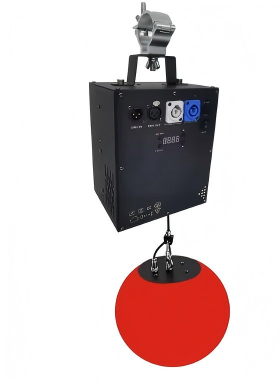
Robin came to us with a clear vision: a hoist with robust safety features (limit switches, programmable positioning, etc.) that could lift a 10cm LED bulb at its end. The catch? The steel cable needed to be between 30 and 40 meters long.
The challenge? Long-cable hoist mechanics plus LED lighting integration is a cross-disciplinary requirement that few suppliers can handle.
Exploring the Options
We brainstormed two initial approaches:
- Option 1: Buy the hoist and LED ball separately from different specialists. This would be costly but flexible.
- Option 2: Purchase a bundled hoist + LED ball set from a single manufacturer for better integration.
Robin then added new requirements: the LED ball needed to be 15–20W, and the black end cap had to be as small as possible to maximize the illuminated area.
The Challenge: Customization Was Key
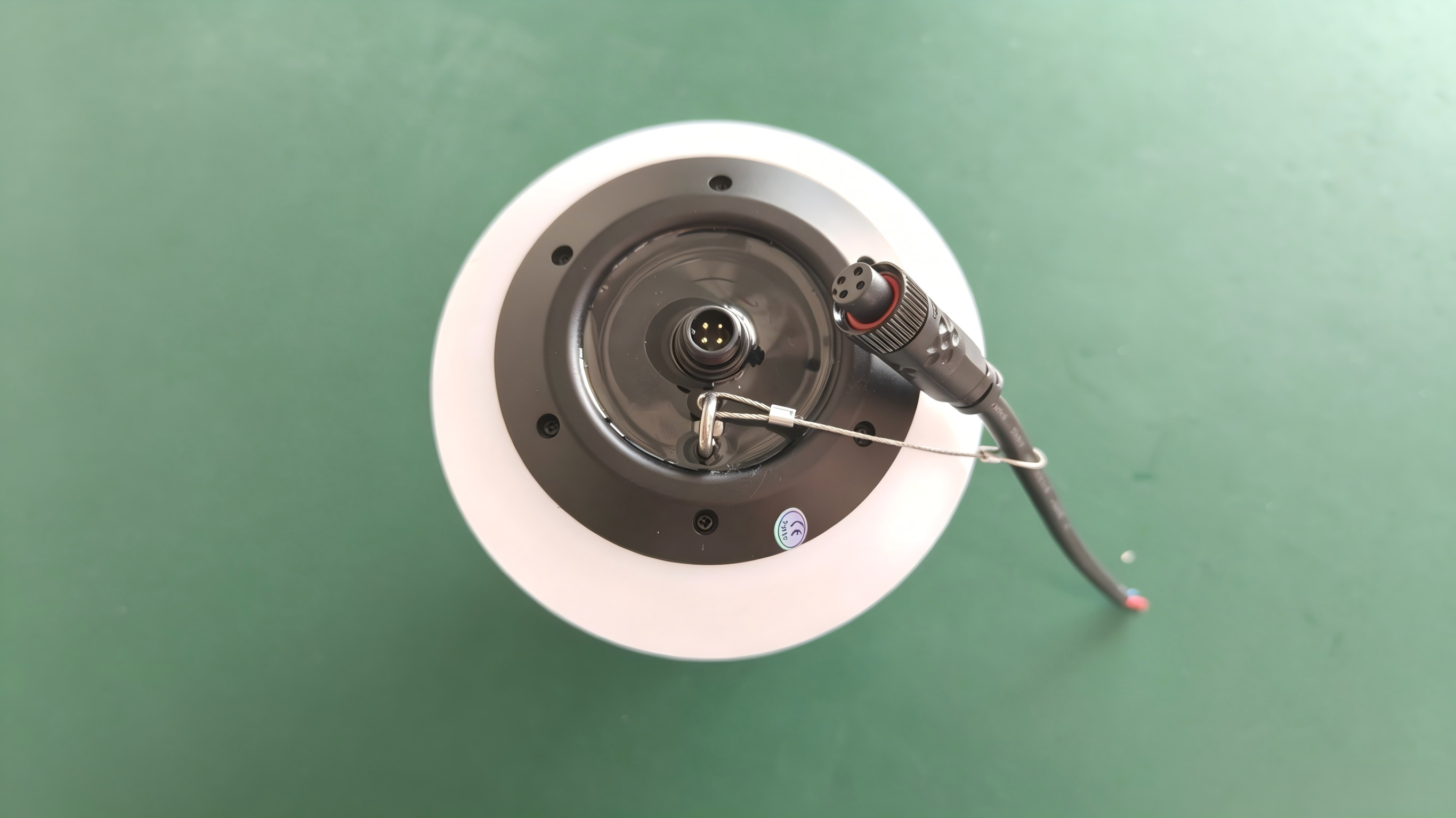
Meeting both demands meant customization was unavoidable. We sourced a sample of a ball with a small black end cap and examined its internal structure. Could it be modified to fit Robin‘s needs?
Our engineering team discovered that with the current design, we could only fit up to 6 RGB imitators. To achieve SPI or DMX functionality, the internal structure would need a complete redesign.
A Critical Lesson: Not All Manufacturers Understand Digital Lighting
We reached out to the manufacturer, who claimed they could customize it. However, deeper discussions revealed they didn’t even understand how DMX lighting works—clearly not the experts we needed. We quickly pivoted when we realized our partner lacked the expertise.
The Pivot: A New Plan
With time on our side (the project wasn’t urgent), we shifted gears. We found a manufacturer specializing in SPI/DMX-compatible designs—specifically, ones with larger black end caps that could house the necessary LEDs and IC drivers.
Testing Strategy: Two Options for Robin
We proposed two testing options to Robin:
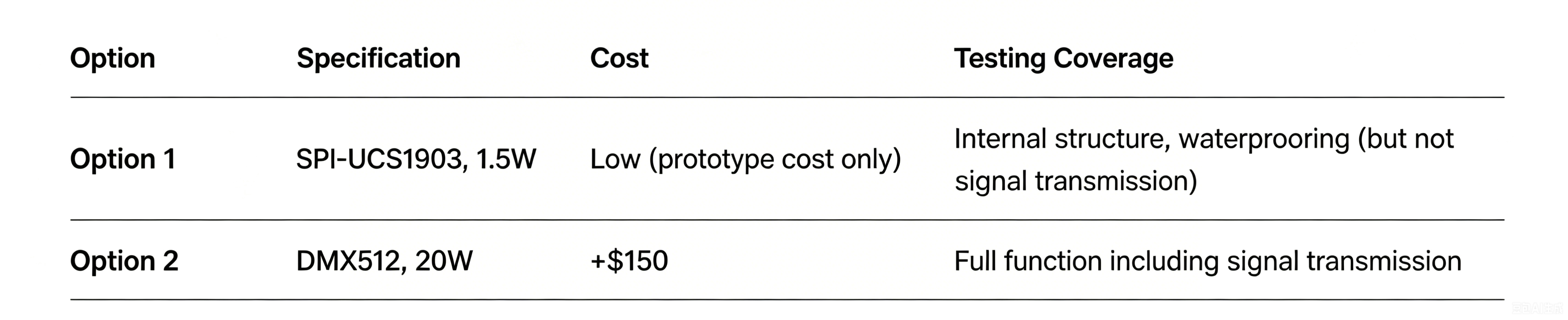
- Option 1 approach: Test standard SPI-UCS1903 sample first. For the final batch, we‘d switch to DMX-20W.
- Option 2 approach: Fully customize a DMX512 sample. This would test everything but risked additional costs if PCB changes were needed later.
Robin opted for the first option, choosing the 1.5W SPI sample to minimize upfront costs.
The Outcome
After thorough testing, we shipped the sample to Robin, eager to hear the results.
This project taught us that flexibility, persistence, and knowing when to pivot are just as important as technical expertise.
Whatever the feedback, our commitment remains: we will always find the optimal solution for our clients.
Stay tuned for Robin‘s feedback—and remember, even the most challenging projects can lead to the most rewarding solutions!
Have a complex lighting integration project?
We're not afraid of a challenge. Our [Custom LEDs] team specializes in solving unconventional engineering problems. [Contact Us Today] to discuss your requirements.