
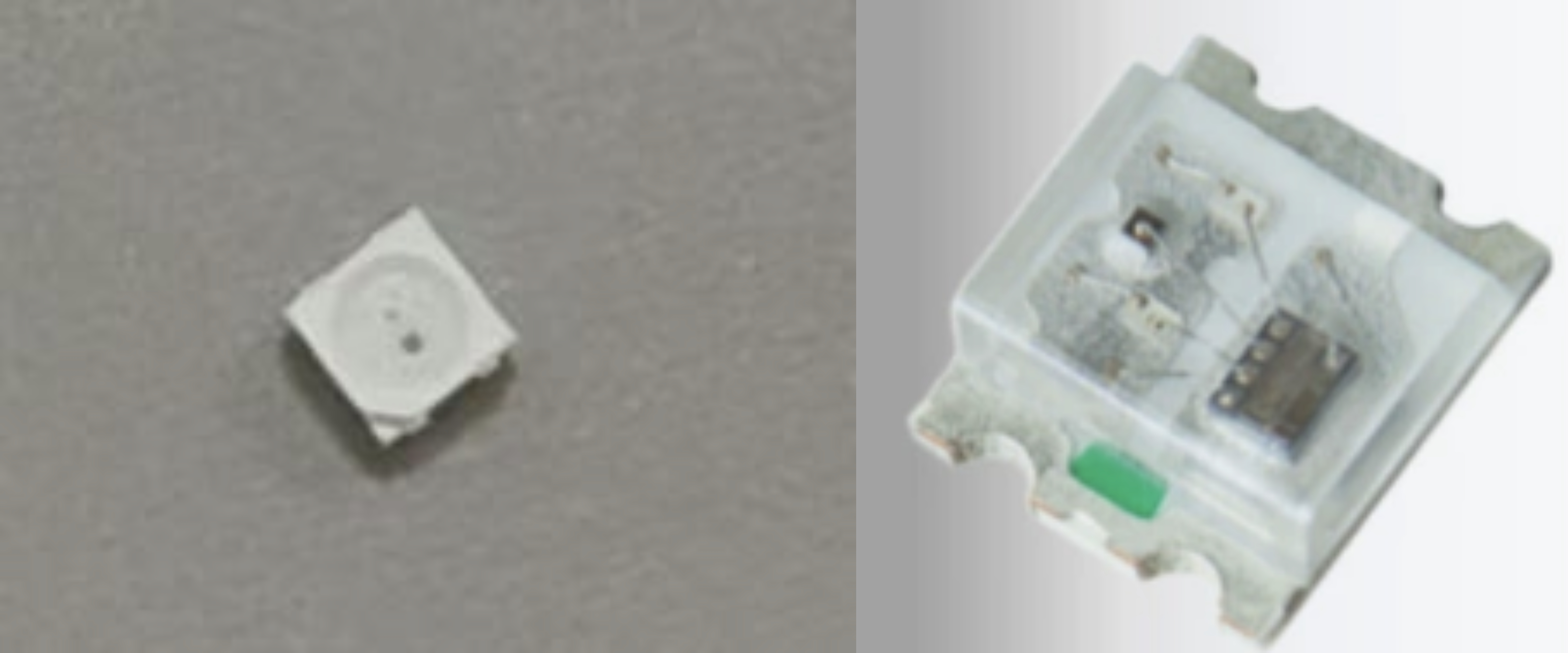
LED Molding vs. SMT: Understanding the Two Key Processes in LED Manufacturing
In the world of LED lighting, the terms "molding" and "SMT" (Surface Mount Technology) are often mentioned, but they are frequently misunderstood as competing or even interchangeable processes. This is not the case. In fact, they are two completely different stages in the life of an LED product, serving distinct purposes. Understanding the difference is key to appreciating how modern LEDs are made.
The Big Picture: Two Steps in the Production Chain
To understand the difference, it's helpful to view them as a two-step manufacturing process:
Molding (Packaging): The "Birth" of an LED Chip. This is a chip-level process. It's about taking the raw, fragile LED chip and encapsulating it in a protective "body" that includes optical elements and electrical leads.
SMT (Assembly): The "Employment" of an LED Chip. This is a board-level process. It's about taking the already-packaged LED component and soldering it onto a printed circuit board (PCB) to create a functional device.
One is about creating the component, the other is about using the component.
What is Molding?
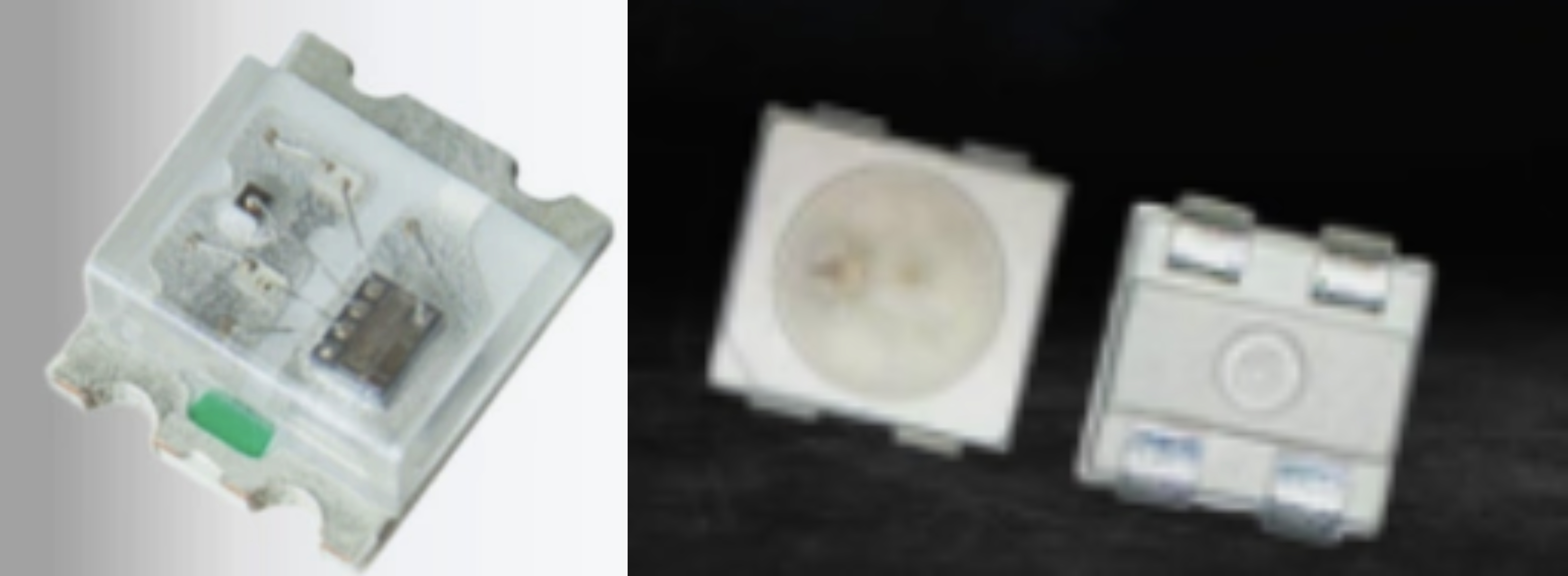
Molding is a primary packaging process. After the LED chip is placed on a lead frame and wire-bonded, it is encapsulated in a material—typically epoxy resin or silicone—to form a protective structure.
Aspect | Description |
|---|---|
Process | The chip is covered with liquid or solid resin/silicone inside a mold. This is then cured under pressure and heat to form a solid lens or protective layer. |
Primary Purpose | To protect the fragile chip and wire bonds from mechanical damage, moisture, and contamination. To shape the light output (e.g., creating a lens for a specific beam angle). |
Product Examples | Traditional "Lamp LEDs" (bullet or oval-shaped with leads) are produced via molding. It's also used for advanced SMD LEDs using an EMC (Epoxy Molding Compound) process for high-power, high-reliability applications. |
Key Characteristics | Typically involves high tooling and equipment costs. Can achieve superior optical consistency, which is critical for applications where color and light quality are paramount. |
What is SMT?
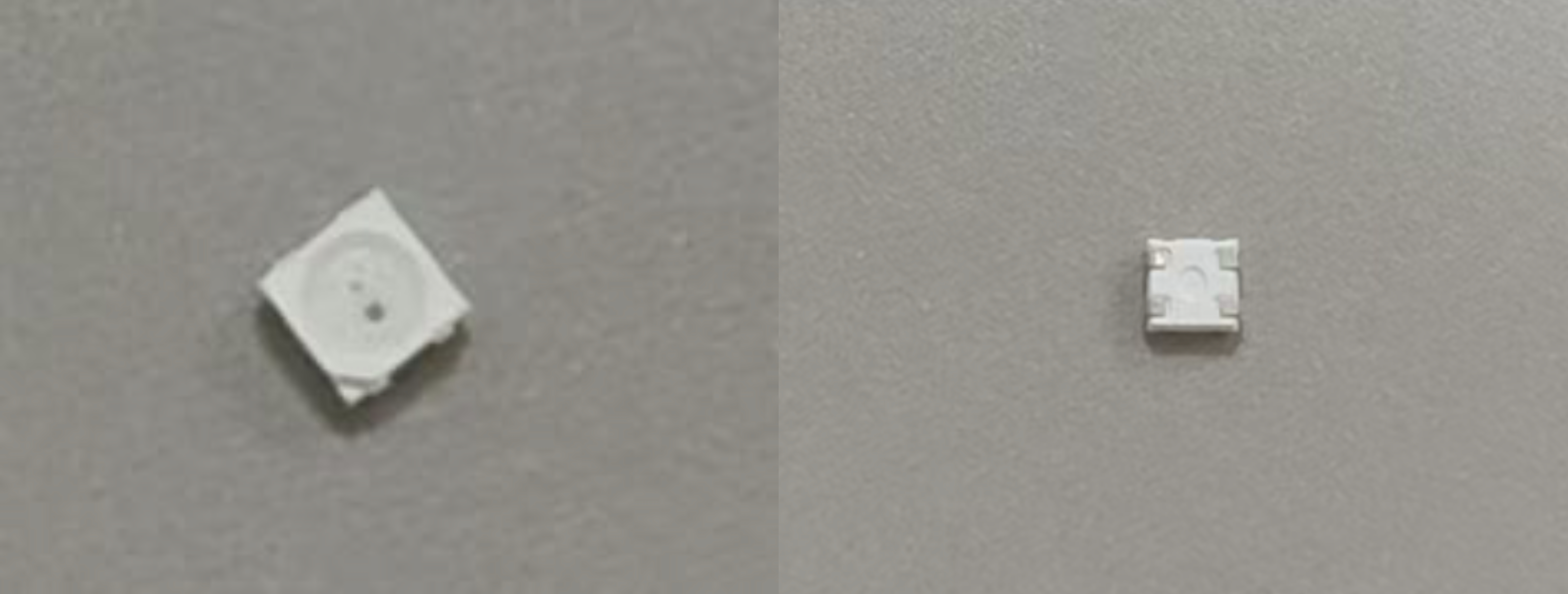
SMT is a secondary assembly process. It's the industry-standard method for mounting surface-mount devices (SMDs) directly onto the surface of a PCB.
Aspect | Description |
|---|---|
Process | Pick-and-place machines accurately position pre-packaged LED components onto a PCB coated with solder paste. The board is then heated in a reflow oven to melt the solder, creating permanent electrical and mechanical connections. |
Primary Purpose | To efficiently and reliably assemble packaged electronic components onto a circuit board to create a functional lighting or display module. |
Product Examples | Almost all modern LED lighting and display products: LED strips, downlights, mobile phone backlights, computer monitors, and indoor LED display screens. |
Key Characteristics | Highly automated, enabling very high assembly speeds and low cost per component. The accuracy of the placement machine determines the final alignment of the LEDs. |
Key Differences at a Glance
Feature | Molding | SMT |
|---|---|---|
Stage in Production | Primary (Chip-level packaging) | Secondary (Board-level assembly) |
What It Acts On | Raw LED chip | Pre-packaged LED component |
Primary Goal | Protect chip, create lens, shape light | Solder component to PCB, connect electrically |
Key Process Steps | Die bonding, wire bonding, mold injection, curing | Solder paste printing, pick-and-place, reflow soldering |
Equipment | Mold press, mold injection machine | Pick-and-place machine, reflow oven |
Result | A finished, packaged LED component (e.g., a 5050 SMD) | A functional PCB assembly (e.g., a lighting module) |
Common Myths and Misconceptions
It's helpful to clear up some common points of confusion:
Myth 1: Molding is outdated.
Fact: While traditional through-hole molding (like bullet LEDs) is less common, molding is still vital. Advanced processes like EMC (Epoxy Molding Compound) molding are used to create high-power, high-reliability SMD LEDs that can handle high temperatures and currents, making them essential for automotive and outdoor lighting.
Myth 2: SMT is the same as molding.
Fact: They are entirely different. An LED cannot be "created" by SMT; SMT only mounts pre-existing components. The quality of the molded LED component directly impacts the final performance, regardless of how well it's placed.
Myth 3: One is inherently better than the other.
Fact: They are complementary, not competitive. A high-quality final product relies on both excellent molding (for the LED's optical and protective qualities) and precise SMT (for reliable assembly).
Summary Table
Aspect | Molding (Packaging) | SMT (Assembly) |
|---|---|---|
What It Does | Creates the LED component. | Mounts the LED component. |
Focuses On | Protecting the chip and controlling the light. | Soldering reliability and assembly efficiency. |
Deals With | The chip itself (chip-level). | The packaged component (board-level). |
Example | Encapsulating a blue LED chip with phosphor to create a white LED. | Placing that white LED onto a strip with other components to make a LED strip. |
Final Thoughts
Understanding the distinction between molding and SMT is crucial for anyone involved in specifying or designing LED products. Molding is about the quality of the light source itself—its protection, its optical properties, and its long-term reliability. SMT is about the quality of the assembly—how effectively and efficiently these light sources are integrated into a final product.
They are not two paths, but two essential steps on the same journey from a fragile chip to a robust, functional lighting solution.
Looking for High-Quality LED Solutions?
At Xuanan Lighting, we work with a wide range of LED components, ensuring both the chip quality (molding) and the assembly precision (SMT) meet the highest standards for your application.
👉 Contact Us Today to discuss your project requirements.